
Introduction
In today’s digital-first world, businesses of all sizes are turning to technology to enhance their operations and reach their customers effectively. One of the most powerful tools for achieving this is a custom mobile or web application. Unlike off-the-shelf solutions, custom app development services provide businesses with software tailored specifically to their unique needs. This ensures that the app aligns perfectly with company goals, workflows, and customer expectations.
Custom apps allow businesses to stand out in competitive markets by offering personalized experiences that generic applications cannot provide. Whether it’s a startup looking to launch a unique product, a medium-sized company seeking workflow automation, or a large enterprise aiming to integrate complex systems, custom apps are the ideal solution.
The process of developing a custom application is more than just writing code. It involves understanding the business’s objectives, planning the app structure, designing a user-friendly interface, ensuring robust security, and testing extensively before launch. Partnering with reliable custom app development services ensures businesses get high-quality software that delivers long-term value.
In this guide, we will explore everything you need to know about custom app development, including its importance, the development process, benefits, risks, common mistakes, expert tips, and answers to frequently asked questions. By the end, you’ll have a clear understanding of how to leverage custom apps to enhance your business efficiency and customer experience.
What is Custom App Development?
Custom app development is the process of creating software applications that are specifically designed to meet the unique needs of a business or organization. Unlike pre-built or off-the-shelf apps, which offer generalized features for a broad audience, custom apps are built from scratch or heavily customized to serve specific objectives.
These applications can be developed for multiple platforms, including:
- Mobile apps – iOS, Android, or cross-platform solutions
- Web applications – browser-based tools for internal or public use
- Enterprise applications – internal tools to manage business processes
- Hybrid apps – applications that combine elements of web and mobile apps
Custom apps can integrate seamlessly with existing software, databases, and third-party services, providing a unified ecosystem for businesses. This flexibility makes them ideal for companies seeking unique functionality, improved efficiency, and better control over their digital assets.
For example, a retail company might use a custom app to manage inventory, track sales, and engage customers through personalized promotions. Similarly, a healthcare provider may develop a custom app to schedule appointments, monitor patient health, and securely store medical records.
Why is Custom App Development Important?

Custom app development is becoming increasingly important because businesses are realizing that generic software often fails to meet their precise needs. Here are the key reasons why it matters:
- Tailored Solutions: Custom apps are built to align with a company’s specific workflows, ensuring that the software works for the business, not the other way around.
- Competitive Advantage: Businesses can offer unique services or features that differentiate them from competitors.
- Scalability: Custom apps can grow with the business, allowing for additional features and integrations as needs evolve.
- Enhanced Security: Custom applications can be built with robust security measures, reducing vulnerabilities associated with standard software.
- Improved User Experience: Apps can be designed to match the expectations of target users, ensuring better engagement and satisfaction.
- Cost Efficiency in the Long Term: While upfront costs may be higher, businesses save money by avoiding unnecessary features, license fees, or limitations of off-the-shelf software.
In short, investing in custom app development services allows businesses to create software that supports growth, streamlines operations, and strengthens relationships with customers.
Detailed Step-by-Step Guide to Custom App Development
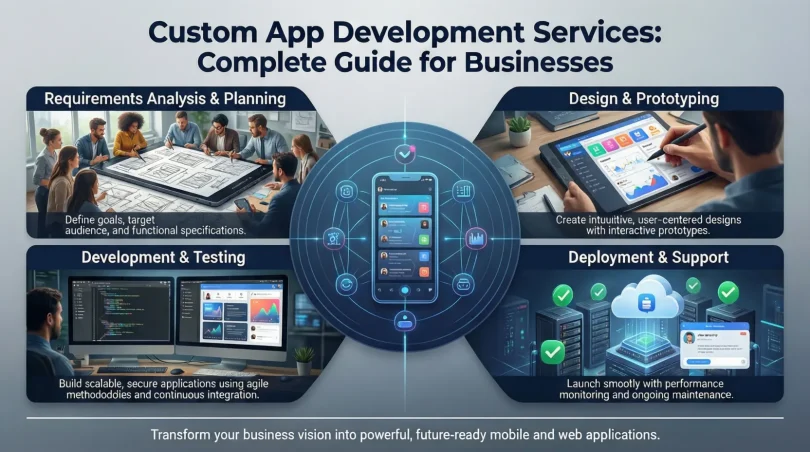
Developing a custom application involves multiple stages, each critical to ensuring the final product is functional, secure, and user-friendly. Here’s a step-by-step guide:
Step 1: Requirement Analysis
The first step is to understand the business goals and user needs. Key activities include:
- Conducting stakeholder interviews
- Analyzing current processes and systems
- Identifying target users and their expectations
- Listing desired features and functionalities
This stage ensures that the development team has a clear roadmap and that the app addresses real business problems.
Step 2: Planning and Strategy
Once requirements are clear, the planning phase begins. This includes:
- Defining project scope
- Setting timelines and milestones
- Choosing the appropriate technology stack
- Creating a budget estimate
- Identifying potential risks and mitigation strategies
A solid plan reduces uncertainties and sets realistic expectations for the project.
Step 3: UI/UX Design
Design is crucial for user engagement. In this phase:
- Wireframes and prototypes are created
- User interfaces are designed with intuitive navigation
- User experience is optimized for ease of use
- Branding and aesthetics are incorporated
A well-designed app ensures users can interact with it seamlessly, improving adoption rates.
Step 4: Development
This is the core phase where actual coding happens. Development typically follows agile methodologies to allow for iterative progress. Activities include:
- Backend development (server, database, API integration)
- Frontend development (user interface and user experience)
- Integration with third-party services
- Regular progress updates and reviews
Step 5: Testing
Testing ensures the app functions as intended and is free from critical bugs. Key types of testing include:
- Functional testing
- Usability testing
- Performance testing
- Security testing
- Compatibility testing across devices and platforms
Step 6: Deployment
After thorough testing, the app is deployed to production. Steps include:
- Setting up servers and databases
- Configuring hosting and cloud services
- Publishing mobile apps to App Store and Google Play
- Monitoring for initial user feedback
Step 7: Maintenance and Updates
Custom apps require ongoing maintenance to remain effective. Tasks include:
- Bug fixes and performance improvements
- Security updates
- Feature enhancements based on user feedback
- Regular monitoring for downtime or technical issues
By following this structured approach, businesses can ensure their custom app delivers value consistently and adapts to evolving needs.
Benefits of Custom App Development
Investing in custom app development comes with numerous advantages. Some of the key benefits include:
- Tailored Functionality: The app meets all specific business requirements without unnecessary features.
- Enhanced User Engagement: Custom designs and features provide a superior user experience.
- Scalability: The app can be updated and expanded as the business grows.
- Integration: Seamless connection with existing systems and third-party tools.
- Improved Security: Custom apps can implement advanced security protocols.
- Branding: The app reflects the company’s brand identity perfectly.
- Cost Efficiency: Reduces long-term costs by avoiding subscriptions and limitations of generic apps.
- Data Management: Centralized control over sensitive business and customer data.
- Competitive Edge: Unique features can differentiate the business in the market.
Disadvantages / Risks of Custom App Development
While custom apps offer many benefits, businesses should also be aware of potential risks:
- High Initial Cost: Developing a custom app requires significant investment upfront.
- Time-Consuming: Full development may take months, depending on complexity.
- Technical Challenges: Complex apps require skilled developers and ongoing support.
- Maintenance Costs: Regular updates and bug fixes incur additional expenses.
- Dependency on Developers: Businesses may rely heavily on the development team for support.
- Scope Creep: Unplanned feature additions during development can increase costs and timelines.
By understanding these risks, companies can make informed decisions and plan mitigation strategies.
Common Mistakes to Avoid in Custom App Development
Avoiding common mistakes can save time, money, and frustration. Here are frequent pitfalls:
- Skipping Requirement Analysis: Not understanding user needs leads to irrelevant features.
- Choosing the Wrong Technology Stack: This can limit app performance and scalability.
- Neglecting UI/UX Design: Poor design reduces user engagement and satisfaction.
- Underestimating Testing: Skipping thorough testing results in bugs and security vulnerabilities.
- Ignoring Maintenance: Apps degrade over time without updates and support.
- Overloading Features: Adding too many features can confuse users and increase costs.
- Poor Communication: Lack of clarity between developers and stakeholders leads to delays and mismatches.
FAQs About Custom App Development Services
1. How much does custom app development cost?
The cost depends on the complexity, features, platform, and development team. Small apps may cost a few thousand dollars, while enterprise-level solutions can reach hundreds of thousands.
2. How long does it take to develop a custom app?
Development typically ranges from 3 to 12 months, depending on the app’s complexity and the development methodology. Agile development allows faster iterative releases.
3. Can custom apps be integrated with existing software?
Yes. Custom apps are designed to integrate seamlessly with existing tools, databases, and third-party services, improving efficiency and data flow.
4. What platforms can custom apps be developed for?
Apps can be built for iOS, Android, web browsers, and enterprise systems. Hybrid apps that run on multiple platforms are also common.
5. Is custom app development secure?
Custom apps can be highly secure since they allow implementation of tailored security protocols, encryption, and compliance with industry standards.
6. Can the app be updated after launch?
Absolutely. Maintenance and updates are part of the development lifecycle. Apps can be enhanced with new features, bug fixes, and security improvements over time.
7. What’s the difference between off-the-shelf and custom apps?
Off-the-shelf apps are ready-made solutions suitable for general use, while custom apps are built to meet specific business needs and provide unique functionality.
8. Do I need a professional team for custom app development?
Yes. Professional developers, designers, and testers are essential to create a high-quality, functional, and secure application.
Expert Tips & Bonus Points
- Define Clear Goals: Start with a clear understanding of what you want the app to achieve.
- Prioritize Features: Focus on essential features first to save time and costs.
- Choose the Right Development Partner: Look for experienced developers with a proven track record.
- Test Early and Often: Regular testing during development prevents major issues later.
- Plan for Scalability: Design the app to grow with your business, including database expansion and additional modules.
- Focus on Security: Ensure compliance with industry standards and implement robust encryption.
- Gather User Feedback: Post-launch feedback helps improve functionality and user experience.
- Document Everything: Keep detailed documentation for maintenance, updates, and onboarding new team members.
- Leverage Analytics: Integrate tools to track user behavior and app performance for data-driven improvements.
Conclusion
Custom app development services empower businesses to achieve their goals with software tailored to their exact needs. Unlike generic solutions, custom apps provide scalability, security, integration capabilities, and a superior user experience. From startups to large enterprises, investing in a custom app can streamline operations, enhance customer engagement, and give a competitive advantage in the market.
While the process requires careful planning, investment, and collaboration with skilled developers, the benefits far outweigh the challenges. Businesses that avoid common mistakes, focus on user-centric design, and maintain their applications post-launch can enjoy long-term value and operational efficiency.
In an increasingly digital world, custom app development services are no longer a luxury—they are a necessity for companies looking to innovate, grow, and remain competitive. By understanding the development process, evaluating risks, and following expert tips, businesses can maximize the return on their investment and deliver exceptional experiences to their users.
Investing in custom apps today ensures businesses are prepared for tomorrow’s challenges, enabling them to adapt quickly, serve customers better, and stay ahead of the competition. Custom app development is more than technology—it’s a strategic tool for growth and success.