
Introduction
In today’s digital world, mobile apps have become an essential part of our daily lives. Among the various mobile platforms, iOS stands out due to its performance, security, and user-friendly experience. Businesses, startups, and even independent developers aim to create innovative iOS apps to reach millions of Apple users worldwide. However, developing an iOS app requires more than just coding; it requires strategic planning, design thinking, and understanding Apple’s ecosystem.
iOS app development solutions offer a structured approach to building applications that are not only functional but also scalable, secure, and appealing. From concept creation to deployment on the App Store, every step matters. Whether you are a beginner trying to understand the basics or an intermediate developer seeking advanced insights, this guide will walk you through everything you need to know.
iOS development is popular because of the premium audience it attracts, the consistent revenue model, and the high level of trust users place in Apple apps. Businesses can leverage this platform to enhance brand visibility, improve customer engagement, and generate revenue efficiently. With proper guidance, even a novice developer can learn how to turn an idea into a successful iOS app.
In this article, we will explore the meaning of iOS app development, its importance, a step-by-step development guide, benefits, risks, common mistakes, FAQs, expert tips, and concluding advice to help you master iOS app development solutions.
What is iOS App Development?
iOS app development is the process of creating applications for Apple devices, including iPhones, iPads, Apple Watches, and Apple TVs. It involves designing, coding, testing, and deploying apps using programming languages like Swift and Objective-C, along with Apple’s development tools such as Xcode.
The main goal of iOS app development is to provide users with a smooth, secure, and visually appealing experience. Unlike Android, iOS apps are built for a specific ecosystem, which allows developers to optimize performance and ensure uniformity across devices.
iOS app development solutions also include backend development, integration with APIs, and incorporating features like push notifications, in-app purchases, and location tracking. Developers follow Apple’s strict guidelines to ensure apps are approved and listed on the App Store.
In simple terms, iOS app development solutions are comprehensive strategies and tools that help developers transform ideas into fully functional Apple applications.
Why is iOS App Development Important?
iOS app development is crucial for several reasons:
- High-Quality User Experience – iOS users expect seamless performance, fast load times, and intuitive interfaces. Good development solutions ensure these expectations are met.
- Revenue Opportunities – iOS users are more likely to make in-app purchases, making it a profitable platform for businesses.
- Security – Apple provides strong security measures, and following proper development practices enhances app safety.
- Brand Credibility – Having an app on the App Store builds trust and credibility among customers.
- Innovation – iOS apps often use cutting-edge technologies like ARKit, Core ML, and SwiftUI, allowing developers to implement innovative features.
- Scalability – Proper development solutions allow apps to grow with user demand and support multiple devices efficiently.
In short, iOS app development solutions are not just about coding; they are about creating apps that provide value, maintain security, and enhance user engagement.
Detailed Step-by-Step Guide to iOS App Development
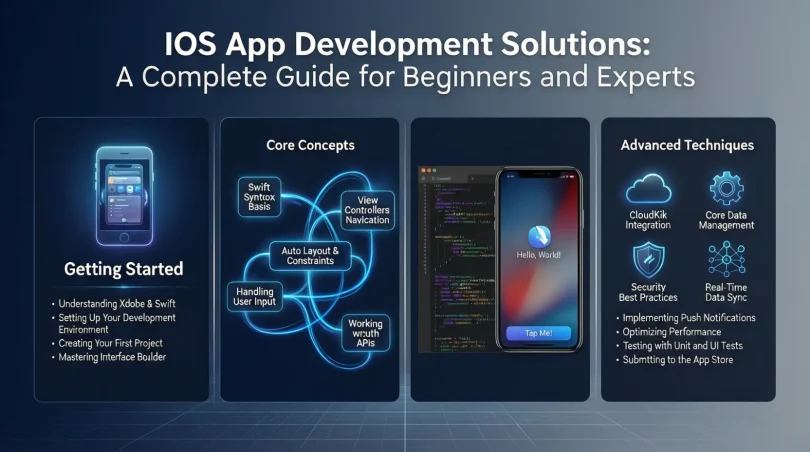
Developing an iOS app requires careful planning and execution. Here’s a step-by-step guide to building a successful iOS application:
Step 1: Idea and Market Research
- Identify the app’s purpose and target audience.
- Analyze competitors to find gaps or opportunities.
- Validate your idea by collecting feedback from potential users.
Step 2: Define Features and Functionality
- Create a list of core features your app will offer.
- Decide on optional features for future updates.
- Prioritize features based on user needs and development effort.
Step 3: Choose the Right Development Tools
- Xcode: Apple’s official IDE for iOS development.
- Swift: Primary language for modern iOS apps.
- Objective-C: Legacy language still used in some apps.
- TestFlight: Tool for beta testing iOS apps.
Step 4: UI/UX Design
- Create wireframes to map app layout and navigation.
- Focus on intuitive design and consistent Apple Human Interface Guidelines.
- Design high-fidelity mockups to visualize the final app.
Step 5: Backend Development
- Set up servers, databases, and APIs if the app requires data storage or online services.
- Ensure backend supports scalability and security measures.
Step 6: Coding the App
- Start with the main functionality before adding advanced features.
- Use Swift’s clean syntax and reusable code components for efficiency.
- Implement error handling and debugging at every stage.
Step 7: Testing and Quality Assurance
- Perform unit testing to verify individual components.
- Conduct integration testing for overall app functionality.
- Test on multiple iOS devices to ensure compatibility and performance.
Step 8: Deployment to the App Store
- Prepare app metadata, screenshots, and descriptions.
- Follow Apple’s App Store guidelines to avoid rejection.
- Submit the app for review and make necessary adjustments if required.
Step 9: Post-Launch Maintenance
- Monitor app performance and user feedback.
- Release updates to fix bugs and add features.
- Optimize app for new iOS versions and devices.
By following these steps, developers can create high-quality iOS apps that meet user expectations and business goals.
Benefits of iOS App Development Solutions

iOS app development solutions offer numerous advantages:
- User Trust: Apple’s stringent review process ensures apps are secure and reliable.
- Revenue Potential: In-app purchases and premium apps generate significant income.
- Performance: Optimized apps provide fast and smooth user experience.
- Global Reach: Access to millions of Apple users worldwide.
- Innovative Features: Support for AR, AI, machine learning, and other advanced technologies.
- Scalability: Apps can grow without compromising performance.
- Consistency: Uniform experience across all Apple devices.
- Brand Visibility: Presence on the App Store enhances credibility and trust.
Disadvantages / Risks of iOS App Development Solutions
While iOS app development has many benefits, it also comes with some challenges:
- High Development Cost: iOS apps can be expensive due to advanced tools and developer expertise required.
- Strict App Store Guidelines: Apple’s approval process can be lengthy and sometimes restrictive.
- Limited Customization: iOS apps must follow Apple’s design and interface guidelines.
- Hardware Dependency: Apps need optimization for various Apple devices.
- Learning Curve: Beginners may find Swift and Xcode challenging initially.
- Frequent Updates: Developers must continuously update apps to support new iOS versions.
Being aware of these risks helps developers prepare better strategies for a smooth development process.
Common Mistakes to Avoid in iOS App Development
- Skipping Market Research: Launching an app without understanding user needs often leads to failure.
- Overloading Features: Adding too many features can make the app slow and confusing.
- Ignoring Apple Guidelines: Not following App Store rules can result in app rejection.
- Neglecting Testing: Insufficient testing leads to bugs and poor user experience.
- Weak Security Measures: Failing to secure user data can harm reputation and trust.
- Poor UI/UX Design: Complex navigation and cluttered interfaces discourage users.
- Lack of Maintenance: Ignoring updates and performance improvements decreases app longevity.
Avoiding these mistakes ensures your iOS app stands out and performs well in the competitive market.
FAQs About iOS App Development Solutions
1. What programming languages are used for iOS app development?
iOS apps are primarily developed using Swift, which is modern, fast, and secure. Some older apps use Objective-C, though Swift is now preferred.
2. How long does it take to develop an iOS app?
The development timeline depends on the app’s complexity. A basic app may take 2–3 months, while complex apps can take 6–12 months or more.
3. Is it expensive to develop an iOS app?
Yes, iOS app development can be costly due to skilled developers, tools, and design requirements. However, it often offers high ROI due to premium users and monetization opportunities.
4. Can beginners develop iOS apps?
Absolutely. With proper learning resources, practice in Xcode, and Swift knowledge, beginners can create functional apps and gradually improve their skills.
5. What is the difference between iOS and Android app development?
iOS apps are built for Apple devices and follow strict guidelines, ensuring uniform performance. Android apps target multiple devices with varying specs, which may require more testing.
6. How can I monetize an iOS app?
You can monetize apps through in-app purchases, subscription models, ads, or selling premium apps directly on the App Store.
7. Do I need a Mac to develop iOS apps?
Yes, Xcode runs only on macOS, so a Mac device is required for iOS development and App Store submission.
8. What is the App Store review process?
After submission, Apple reviews the app for functionality, design, and compliance with guidelines. Approval may take a few days to weeks.
9. Should I hire a professional iOS developer?
If your app is complex or requires advanced features, hiring an experienced developer ensures better quality and faster development.
10. How do I ensure my app stays updated?
Regular updates based on user feedback, new iOS features, and security patches keep your app relevant and functional.
Expert Tips & Bonus Points for iOS App Development
- Focus on SwiftUI: Use SwiftUI for faster UI development and better performance.
- Optimize for Battery & Performance: Avoid heavy operations that drain battery or slow down devices.
- Test on Real Devices: Simulator testing is helpful, but real-device testing ensures accurate performance.
- Follow Apple’s Human Interface Guidelines: Consistency with Apple’s design language improves chances of approval.
- Use Analytics: Integrate analytics to track user behavior and improve app experience.
- Plan for Scalability: Design your backend and code to handle growing user numbers.
- Beta Testing: Use TestFlight for testing with real users and collecting valuable feedback.
- Regular Updates: Keep apps compatible with new iOS versions and introduce new features to retain users.
- Security First: Encrypt sensitive data, implement secure login, and follow Apple’s security standards.
Conclusion
iOS app development solutions are essential for anyone looking to build professional, secure, and successful applications on Apple’s ecosystem. From planning and coding to testing and deployment, each step requires careful attention to detail and adherence to best practices. By following structured development solutions, businesses and developers can create apps that not only meet user expectations but also stand out in a competitive marketplace.
The benefits of iOS apps, including high user engagement, revenue potential, and security, make it a worthwhile investment for startups and established businesses alike. However, challenges like strict guidelines, development costs, and regular updates require preparation and strategy. Avoiding common mistakes and leveraging expert tips can help developers achieve success faster.
Whether you are a beginner or an intermediate developer, mastering iOS app development solutions opens the door to endless opportunities. With persistence, continuous learning, and creativity, anyone can turn an idea into a high-performing, innovative app that reaches millions of users worldwide. The key is to combine technical skills, design thinking, and user-centric approaches to deliver apps that truly make a difference.