
Introduction
In today’s digital world, mobile apps have become an essential part of daily life. From shopping and banking to learning and entertainment, almost every activity now involves a mobile application. Businesses, startups, and entrepreneurs are increasingly focusing on mobile app development services to reach their target audience and enhance customer engagement. Whether you are a small business or a large enterprise, having a mobile app can significantly impact your brand’s growth and revenue.
Mobile app development services encompass a wide range of solutions, from designing and coding to testing and launching apps on platforms like iOS and Android. With millions of mobile apps available in app stores, the competition is tough. Therefore, creating a high-quality, user-friendly app is critical. It’s not just about having an app; it’s about having an app that provides value, solves user problems, and offers a seamless experience.
For beginners and intermediate users looking to understand mobile app development services, this guide covers everything you need to know. You’ll learn what mobile app development services are, why they are important, the steps involved in developing a mobile app, the benefits, risks, common mistakes, expert tips, and answers to frequently asked questions. By the end, you will have a clear roadmap to create a successful mobile app, even if you’re new to the field.
What is Mobile App Development Services?
Mobile app development services refer to the professional solutions offered by developers or companies to design, build, and maintain mobile applications. These services include all phases of app creation, from initial concept and design to coding, testing, deployment, and post-launch support.
The main goal of mobile app development services is to deliver an app that is visually appealing, functional, secure, and user-friendly. Developers use various programming languages, frameworks, and tools depending on the type of app, platform, and business requirements.
There are generally two main types of mobile app development:
- Native App Development – This involves creating apps specifically for one platform, like iOS or Android. Native apps are fast, reliable, and take full advantage of device features.
- Cross-Platform App Development – This allows developers to build apps that work on multiple platforms using a single codebase. It saves time and cost but may have limitations in performance and device integration.
Mobile app development services also include additional features like app maintenance, updates, user support, and integration with third-party services. Companies offering these services aim to ensure that the app meets business goals while providing an excellent user experience.
Why is Mobile App Development Services Important?
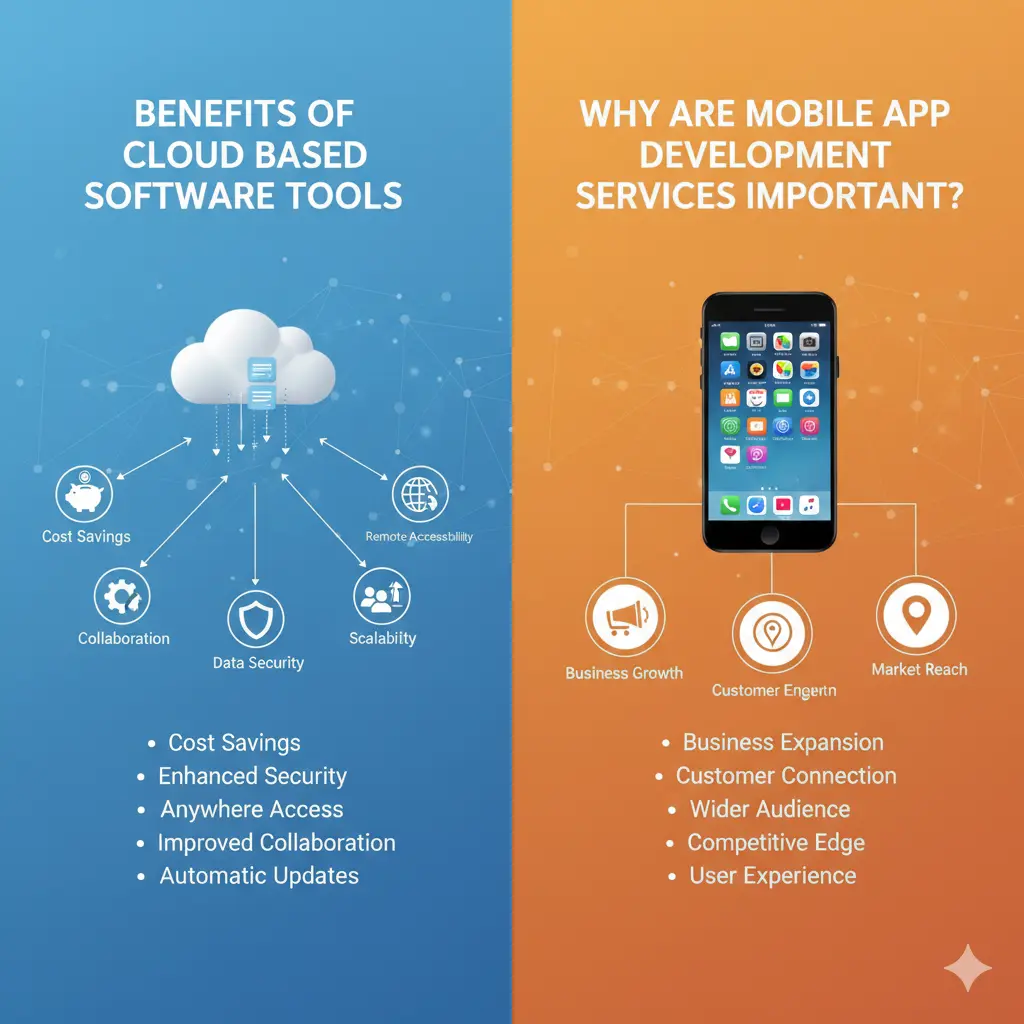
Mobile apps are no longer optional; they are essential for businesses and individuals who want to stay relevant in today’s fast-paced digital market. Here’s why mobile app development services are so important:
- Reach a Larger Audience – Mobile apps allow businesses to reach users directly on their smartphones, increasing visibility and engagement.
- Enhance Customer Experience – A well-designed app provides convenience, easy navigation, and personalized experiences for users.
- Boost Revenue and Sales – Businesses can increase sales through in-app purchases, subscriptions, and promotions.
- Brand Recognition and Loyalty – Apps help businesses maintain constant communication with customers, building trust and loyalty.
- Data Collection and Analytics – Apps enable companies to track user behavior, preferences, and trends for better decision-making.
- Stay Competitive – With many competitors offering mobile solutions, having a professional app is critical to remain relevant.
In short, mobile app development services help businesses transform their ideas into a functional digital product that can drive growth, increase engagement, and improve customer satisfaction.
Detailed Step-by-Step Guide to Mobile App Development Services
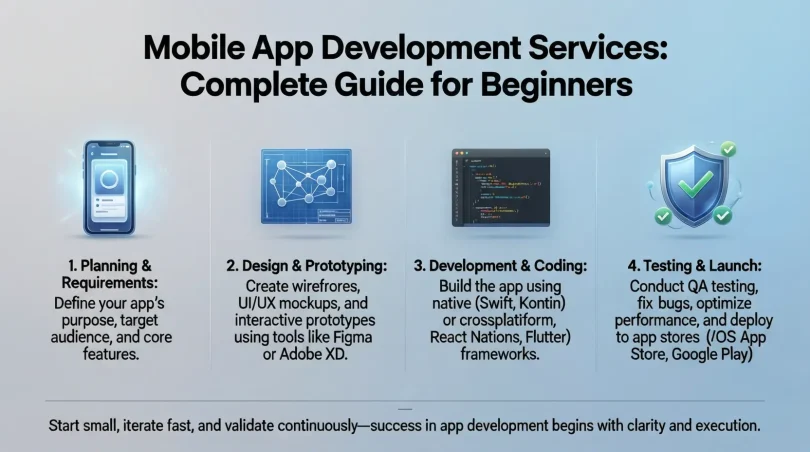
Creating a mobile app involves multiple stages. Following a structured approach ensures a high-quality app that meets user expectations. Below is a step-by-step guide to mobile app development services.
Step 1: Define Your Goals and Target Audience
Before starting development, it’s crucial to identify the purpose of your app. Ask yourself:
- What problem will the app solve?
- Who are the target users?
- What platforms should the app be available on?
- What features are essential for success?
Clearly defining goals and audience helps shape the app’s design, functionality, and overall strategy.
Step 2: Choose the Right Development Approach
Based on your goals, select between:
- Native App Development – Ideal for apps that require high performance and advanced features.
- Cross-Platform App Development – Suitable for apps with moderate complexity and a need for faster development.
- Progressive Web Apps (PWAs) – For cost-effective solutions that work on browsers and mobile devices.
Step 3: Design the User Interface (UI) and User Experience (UX)
The design phase focuses on making the app visually appealing and easy to use. Key aspects include:
- Intuitive navigation and menu structure
- Clear call-to-action buttons
- Consistent color schemes and branding
- Interactive elements to engage users
Wireframes and prototypes are usually created to visualize the app’s layout before development begins.
Step 4: Development and Coding
This stage involves actual coding of the app. Developers use programming languages and frameworks such as:
- Swift for iOS
- Kotlin for Android
- React Native or Flutter for cross-platform apps
The development process is divided into frontend (what users see) and backend (server-side operations, database management, APIs).
Step 5: Testing and Quality Assurance
Testing ensures the app functions correctly and is free of bugs. Common types of testing include:
- Functional Testing – Verifying all features work as intended
- Usability Testing – Ensuring the app is user-friendly
- Performance Testing – Checking speed, responsiveness, and stability
- Security Testing – Protecting user data from threats and vulnerabilities
Multiple rounds of testing are performed to maintain high quality.
Step 6: Deployment and Launch
Once the app is tested and finalized, it’s time to launch it on app stores like Google Play Store and Apple App Store. Key points include:
- Preparing app store listings (title, description, screenshots)
- Meeting platform guidelines and requirements
- Monitoring user feedback and reviews
Step 7: Maintenance and Updates
Post-launch support is essential to keep the app functional and relevant. Maintenance tasks include:
- Fixing bugs and errors
- Updating features based on user feedback
- Ensuring compatibility with new OS versions
- Improving performance and security
By following these steps, mobile app development services deliver a comprehensive solution that ensures a successful and sustainable app.
Benefits of Mobile App Development Services
Mobile app development services offer numerous advantages for businesses and users alike. Some key benefits include:
- Direct Communication with Users – Push notifications and updates keep users engaged.
- Increased Revenue – In-app purchases, subscriptions, and ads boost profits.
- Enhanced Customer Experience – Personalized content and smooth navigation improve satisfaction.
- Brand Awareness – Consistent branding within the app strengthens recognition.
- Market Insights – Analytics provide valuable data on user behavior and preferences.
- Competitive Advantage – A professional app helps businesses stand out in the market.
- Offline Access – Some apps offer offline functionality, increasing convenience for users.
These benefits highlight why investing in professional mobile app development services is a wise decision for businesses of all sizes.
Disadvantages / Risks
While mobile app development services have many advantages, there are also potential drawbacks and risks to consider:
- High Development Costs – Quality apps require investment in design, development, and maintenance.
- Time-Consuming Process – Developing a fully functional app can take weeks or months.
- Technical Challenges – Compatibility issues, bugs, and platform restrictions can arise.
- Security Risks – Poorly developed apps may expose user data to threats.
- Maintenance Requirements – Continuous updates and support are needed to keep the app relevant.
- User Adoption – Even a well-developed app may fail if users are not engaged or find it unnecessary.
Understanding these risks helps businesses plan better and mitigate potential problems.
Common Mistakes to Avoid
Avoiding common mistakes in mobile app development services can save time, money, and effort. Key mistakes include:
- Ignoring User Research – Developing an app without understanding your audience can lead to low adoption.
- Overloading Features – Too many features can confuse users and complicate navigation.
- Neglecting UI/UX Design – Poor design affects usability and user satisfaction.
- Skipping Testing – Releasing an untested app can damage reputation and lose users.
- Not Updating Regularly – Failing to maintain and update the app reduces its effectiveness.
- Choosing the Wrong Platform – Not selecting the right development approach can affect performance and cost.
- Weak Marketing Strategy – Even a great app needs promotion to reach its audience.
By avoiding these mistakes, businesses can ensure their mobile app is both successful and sustainable.
FAQs
1. What is the cost of mobile app development services?
The cost depends on factors like app complexity, platform, design, and development approach. Simple apps may cost a few thousand dollars, while advanced apps can reach tens of thousands.
2. How long does it take to develop a mobile app?
Development time varies based on app complexity. Basic apps may take 6–12 weeks, while complex apps with multiple features may take 6–12 months.
3. Which is better: native or cross-platform development?
Native apps provide better performance and device integration. Cross-platform apps are cost-effective and faster to develop. The choice depends on business needs and budget.
4. Do I need technical knowledge to use mobile app development services?
No, professional app development services handle coding, design, and deployment. However, understanding your goals and target audience helps create a better app.
5. How do I promote my mobile app?
Promote your app using social media, email marketing, app store optimization (ASO), influencer partnerships, and paid advertising to reach your target audience.
6. Can mobile apps work offline?
Yes, certain apps can offer offline functionality by storing data locally on the device. Features like reading, note-taking, and basic tools often work offline.
7. How do mobile app development services ensure security?
Developers use encryption, secure APIs, authentication methods, and regular updates to protect user data and maintain app security.
8. Can an existing website be converted into a mobile app?
Yes, websites can be transformed into mobile apps using web view or progressive web app (PWA) technologies, although native apps usually perform better.
Expert Tips & Bonus Points
- Focus on User Experience First – A simple, intuitive, and responsive design improves adoption rates.
- Start with an MVP – Launching a Minimum Viable Product helps test the market and gather feedback before adding complex features.
- Monitor Analytics – Use tools like Google Analytics or Firebase to track user behavior and optimize the app.
- Prioritize App Store Optimization – Use relevant keywords, visuals, and descriptions to improve visibility.
- Regularly Update Features – Add new features and fix issues based on user feedback to retain engagement.
- Ensure Scalability – Build your app so it can handle more users and features as your business grows.
- Test on Multiple Devices – Check performance on different screen sizes and OS versions.
- Maintain Security Best Practices – Use encryption, secure login, and regular audits to protect data.
Bonus: Incorporating AI features, chatbots, or push notifications can significantly improve user engagement and retention.
Conclusion
Mobile app development services play a crucial role in helping businesses connect with users, improve engagement, and increase revenue. Whether you are a beginner or an intermediate business owner, understanding the process of app development can help you make informed decisions. From planning and design to development, testing, and maintenance, each step is vital to create a successful mobile app.
Investing in professional mobile app development services ensures that your app meets user expectations, functions smoothly, and remains secure. By avoiding common mistakes, following best practices, and continuously updating your app, you can stay ahead in the competitive mobile market. Remember, a well-developed mobile app is not just a tool—it’s a bridge between your brand and your audience, delivering value and building trust over time.
With the right approach, strategy, and expert guidance, your mobile app can become a powerful asset, driving growth, engagement, and long-term success. The future of business is mobile, and leveraging mobile app development services is the key to staying relevant and competitive in this digital era.