
Introduction
In today’s digital world, people use many different devices to access websites. Some browse on mobile phones, others use tablets, laptops, or large desktop screens. Because of this variety, websites must look good and work smoothly on every screen size. This is where responsive web design services become extremely important. These services help businesses create websites that automatically adjust to different devices without breaking layouts or losing usability.
Responsive web design services focus on flexibility, user comfort, and performance. Instead of building separate websites for mobile and desktop users, one responsive website adapts itself to all screens. This approach saves time, reduces cost, and improves the user experience. Visitors stay longer on websites that are easy to read, fast to load, and simple to navigate.
For beginners, the idea of responsive design may sound technical. However, the concept is quite simple. It is about designing a website that responds to the user’s device. For intermediate users, responsive web design services offer advanced techniques that improve speed, SEO, and conversions. Businesses that invest in responsive design often see better search rankings and higher customer trust.
As online competition grows, having a responsive website is no longer optional. It has become a basic requirement for success. Whether you run a blog, an online store, or a service-based business, responsive web design services help you reach more users and deliver a better online experience. In this guide, you will learn what these services are, why they matter, how they work, and how to use them effectively.
What is Responsive Web Design Services?
Responsive web design services are professional solutions that help create websites capable of adapting to different screen sizes and devices. These services use flexible layouts, images, and coding techniques so that a website automatically adjusts its structure based on the user’s screen.
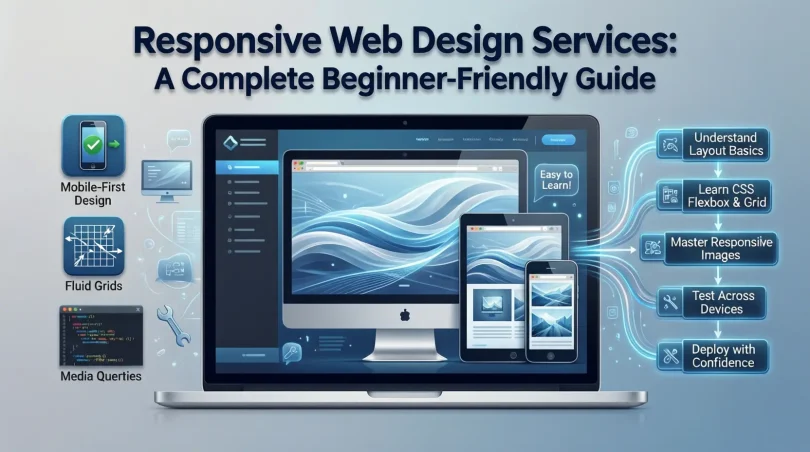
Instead of designing multiple versions of a website, responsive web design services focus on one design that works everywhere. Whether a visitor uses a smartphone, tablet, laptop, or desktop computer, the website layout changes smoothly. Text remains readable, images scale properly, and navigation stays user-friendly.
These services usually include planning, design, development, testing, and optimization. Designers study user behavior and device trends before creating layouts. Developers then use modern technologies like flexible grids and media queries to make the site responsive. After development, the website is tested on multiple devices to ensure consistent performance.
Responsive web design services are used by small businesses, startups, bloggers, and large companies. They are especially important for websites that rely on traffic from search engines and social media. Since most users now browse on mobile devices, responsive design helps businesses stay competitive and relevant in the digital market.
Why is Responsive Web Design Services Important?

Responsive web design services are important because user behavior has changed. People expect websites to load quickly and work perfectly on their devices. If a site looks broken or is difficult to use, visitors leave immediately. This increases bounce rates and reduces conversions.
Search engines also prefer responsive websites. A responsive design improves SEO by providing a single URL and consistent content across devices. This makes it easier for search engines to crawl and index the website. As a result, websites using responsive web design services often rank higher in search results.
Another reason these services matter is cost efficiency. Maintaining one responsive website is cheaper than managing separate desktop and mobile versions. Updates, content changes, and security improvements are easier to handle.
User experience is another key factor. Responsive web design services improve readability, navigation, and overall satisfaction. A positive experience builds trust and encourages users to return. For businesses, this leads to better brand image and increased revenue.
In short, responsive web design services help websites perform better, look professional, and meet modern user expectations. They are essential for long-term online success.
Detailed Step-by-Step Guide
Step 1: Understanding User Needs
The first step in responsive web design services is understanding the target audience. Designers analyze how users interact with websites and which devices they use most. This information helps shape the design strategy.
User research includes studying screen sizes, browsing habits, and content preferences. For example, mobile users prefer simple navigation and quick access to information. Desktop users may expect more detailed layouts. Knowing these needs ensures the website delivers the right experience to every visitor.
Step 2: Planning Flexible Layouts
After research, designers plan flexible layouts. These layouts use grids that adjust according to screen width. Instead of fixed measurements, flexible units allow content to resize smoothly.
Responsive web design services focus on creating layouts that prioritize content. Important information appears first on smaller screens. Less important elements are adjusted or hidden to maintain clarity.
This planning stage prevents layout issues later. It ensures that the website remains visually balanced on all devices.
Step 3: Using Responsive Typography
Text readability is crucial in responsive design. Responsive web design services include selecting fonts and sizes that scale well across devices. Text should not be too small on mobile or too large on desktop screens.
Designers use relative font sizes so that text adjusts automatically. Line spacing and paragraph width are also optimized. This improves readability and keeps users engaged.
Step 4: Optimizing Images and Media
Images play a major role in web design. Responsive web design services ensure that images resize properly without losing quality. Large images are optimized to load faster on mobile devices.
Different image sizes may be used for different screens. Videos are also made responsive so they fit within the layout. This step improves performance and reduces loading time.
Step 5: Implementing Media Queries
Media queries are a core part of responsive web design services. They allow the website to apply different styles based on screen size. For example, a three-column layout on desktop may become a single column on mobile.
Developers write rules that trigger design changes at specific screen widths. This ensures smooth transitions between devices and consistent appearance.
Step 6: Testing Across Devices
Testing is a critical step. Responsive web design services include testing the website on various devices and browsers. This helps identify layout issues, broken elements, or performance problems.
Testing ensures that buttons are clickable, forms work properly, and content displays correctly. Any issues found are fixed before the website goes live.
Step 7: Ongoing Optimization
Responsive web design services do not end after launch. Websites need regular updates and optimization. New devices and screen sizes appear over time, and designs must adapt.
Ongoing optimization includes improving speed, updating layouts, and enhancing user experience. This keeps the website modern and effective.
Benefits of Responsive Web Design Services
- Improves user experience across all devices
- Boosts search engine rankings
- Reduces website maintenance costs
- Increases mobile traffic and engagement
- Enhances brand credibility and trust
- Provides consistent design and content
- Improves conversion rates
- Makes future updates easier
Disadvantages / Risks
- Initial development cost may be higher
- Requires skilled designers and developers
- Testing can be time-consuming
- Poor implementation can affect performance
- Older browsers may have limited support
Common Mistakes to Avoid
One common mistake is ignoring mobile users. Some websites still focus mainly on desktop layouts. This leads to poor mobile experiences and lost traffic.
Another mistake is using heavy images without optimization. Large files slow down loading times and frustrate users. Responsive web design services should always include performance optimization.
Poor navigation design is also a problem. Menus that work on desktop may not suit mobile screens. Designers must adapt navigation for smaller devices.
Skipping testing is another major mistake. Without proper testing, issues may go unnoticed. Responsive web design services should always include thorough testing.
Finally, inconsistent content placement can confuse users. Important information should be easy to find on all devices.
FAQs
What are responsive web design services?
Responsive web design services are professional solutions that create websites adaptable to different screen sizes. They ensure consistent design and usability across devices.
Are responsive web design services suitable for small businesses?
Yes, these services are ideal for small businesses. They help reach mobile users, improve SEO, and reduce long-term costs.
How do responsive web design services affect SEO?
They improve SEO by providing a single, mobile-friendly website. Search engines prefer responsive designs, which can improve rankings.
Do responsive websites load faster?
When optimized correctly, responsive websites load faster. Responsive web design services focus on performance and efficient coding.
Is responsive design better than a separate mobile site?
Yes, responsive design is more efficient. It uses one website instead of multiple versions, making management easier.
How long does it take to implement responsive web design services?
The time depends on website size and complexity. Simple sites may take weeks, while larger projects take longer.
Expert Tips & Bonus Points
Always prioritize content over design. A clean layout with clear content works better on all devices.
Use performance tools to monitor loading speed. Responsive web design services should focus on fast performance.
Keep navigation simple. Mobile users prefer easy access to information.
Update your website regularly. Trends and devices change, so responsive design must evolve.
Work with experienced professionals. Skilled teams deliver better results and avoid common mistakes.
Conclusion
Responsive web design services have become a fundamental part of modern web development. As users continue to browse the internet on a wide range of devices, websites must adapt to meet their expectations. A responsive website ensures that content looks good, loads fast, and remains easy to use on any screen size. This improves user satisfaction and encourages visitors to stay longer.
From a business perspective, responsive web design services offer long-term value. They reduce maintenance costs, improve search visibility, and strengthen brand credibility. Companies that invest in responsive design are better prepared for future digital changes. They can reach more users and provide a consistent experience across platforms.
For beginners, understanding responsive design is a step toward building professional websites. For intermediate users, these services offer advanced optimization and performance improvements. Regardless of experience level, responsive web design services help create websites that are flexible, efficient, and user-focused.
In a competitive online environment, a responsive website is not just a feature. It is a necessity. By choosing the right responsive web design services and following best practices, businesses and individuals can build websites that grow, adapt, and succeed in the digital world.