
Introduction
Running a modern company without the best software tools for business is almost impossible today. Whether you manage a small startup, a growing online store, or a medium-sized company, software tools help you save time, reduce costs, and improve productivity. From managing daily tasks to tracking finances and communicating with teams, the right tools can completely change how a business operates.
In simple words, software tools act like digital helpers. They automate repetitive work, organize information, and help business owners make better decisions. Instead of doing everything manually, you can use smart software to handle accounting, customer support, marketing, project management, and more. This allows you to focus on growth and strategy rather than daily stress.
However, many beginners feel confused when choosing the right tools. There are hundreds of options available, and each one promises great results. Without proper guidance, businesses may waste money on tools they do not really need. That is why understanding the purpose and value of each tool is very important.
In this detailed guide, you will learn about the best software tools for business, why they matter, how to choose them step by step, and how to use them effectively. This article is written in simple English, making it easy for beginners and useful for intermediate readers as well. By the end, you will clearly understand which tools can help your business grow smoothly and professionally.
What Is Best Software Tools for Business?
The best software tools for business are digital applications designed to help companies manage their operations efficiently. These tools support different areas of a business, such as communication, accounting, marketing, sales, customer service, and project management. Their main purpose is to make work faster, easier, and more accurate.
Business software tools can be cloud-based or installed on computers. Cloud-based tools are more popular because they allow teams to work from anywhere. For example, a project management tool helps teams track tasks, deadlines, and progress in one place. Similarly, accounting software helps manage invoices, expenses, and reports without complex manual calculations.
What makes software tools “the best” is not just their features, but how well they match your business needs. A small business may only need basic tools, while a growing company may require advanced systems with automation and analytics. The best tools are easy to use, secure, scalable, and cost-effective.
In short, business software tools act as a digital backbone. They connect people, data, and processes into one smooth system. When chosen correctly, they help businesses work smarter, not harder.
Why Is Best Software Tools for Business Important?
Using the best software tools for business is important because they directly impact productivity, efficiency, and profitability. In today’s competitive market, businesses that rely only on manual work often fall behind. Software tools give companies a strong advantage.
First, these tools save time. Tasks that once took hours can now be completed in minutes. For example, automated email marketing tools send messages to thousands of customers instantly. Second, they reduce errors. Manual data entry often leads to mistakes, while software ensures accuracy.
Another key reason is better decision-making. Many business tools provide reports and insights. These reports help owners understand sales trends, customer behavior, and financial health. With clear data, businesses can plan better strategies.
Software tools also improve teamwork. Communication and collaboration tools keep everyone connected, even in remote teams. This creates transparency and improves overall performance. Additionally, using professional tools builds trust with customers, as services become faster and more reliable.
Overall, the right software tools are not a luxury. They are a necessity for businesses that want to grow, compete, and succeed in the long run.
Detailed Step-by-Step Guide
Step 1: Identify Your Business Needs
Before choosing the best software tools for business, start by identifying your needs. Every business is different, so avoid copying others blindly. List the problems you want to solve, such as managing tasks, handling finances, or improving customer support.
Ask yourself simple questions. Are you struggling with time management? Do you need better communication? Are finances hard to track? Clear answers will guide your choices and prevent unnecessary spending.
Step 2: Categorize Required Software Tools
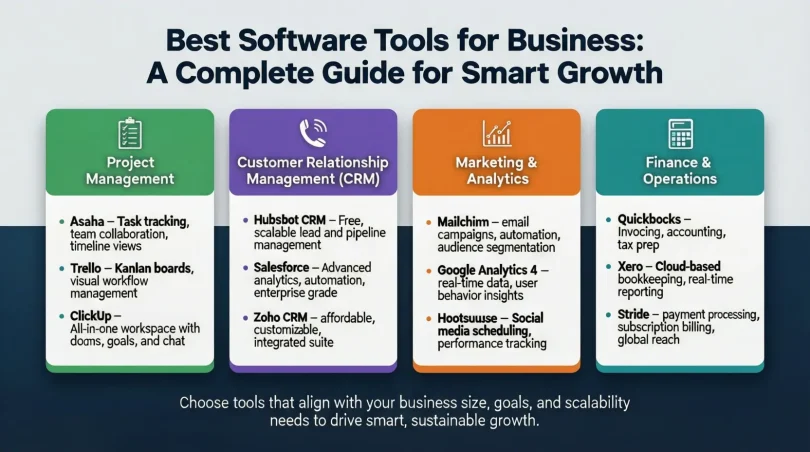
Once needs are clear, divide them into categories. Common categories include project management, accounting, marketing, customer relationship management, and communication tools. This step helps you focus on essentials first.
For example, a service-based business may need scheduling and invoicing tools, while an online store may focus more on inventory and customer management software.
Step 3: Set a Realistic Budget
Budget planning is crucial when selecting the best software tools for business. Many tools offer free plans, while others charge monthly or yearly fees. Decide how much you can spend without harming cash flow.
Remember, expensive tools are not always better. Choose tools that provide value and match your current business size. You can always upgrade later as your business grows.
Step 4: Check Ease of Use and Support
A tool should be easy to use for you and your team. Complex software often leads to frustration and low adoption. Look for tools with a simple interface and clear instructions.
Also, check customer support options. Good support helps resolve issues quickly and ensures smooth operations. Tutorials and guides are a big plus.
Step 5: Test Before Final Decision
Many software providers offer free trials. Use these trials to test features, speed, and usability. Involve your team in testing, as they will use the tools daily.
Testing helps you understand whether the tool fits your workflow. If it feels confusing or unnecessary, move on to another option.
Step 6: Implement and Train Your Team
After selecting the best software tools for business, implement them properly. Provide basic training to your team so everyone understands how to use the tools effectively.
Proper onboarding ensures maximum benefits. Encourage feedback and adjust processes if needed. Over time, your team will become more comfortable and productive.
Benefits of Best Software Tools for Business

- Improve productivity by automating routine tasks
- Save time and reduce operational costs
- Enhance communication and teamwork
- Provide accurate data and business insights
- Improve customer satisfaction and service quality
- Support business growth and scalability
- Reduce human errors and manual work
Disadvantages / Risks
- Initial learning curve for new users
- Monthly or yearly subscription costs
- Risk of choosing tools that do not fit needs
- Dependence on internet for cloud-based tools
- Data security concerns if tools are not reliable
Common Mistakes to Avoid
Many businesses make mistakes when selecting the best software tools for business. One common mistake is buying too many tools at once. This leads to confusion and wasted money. Always start small and expand gradually.
Another mistake is ignoring team feedback. If your team finds a tool difficult, productivity will drop. Also, avoid choosing tools only based on popularity. What works for one business may not work for another.
Not reviewing tools regularly is another issue. Business needs change over time, so review your tools and replace outdated ones. Finally, failing to train staff properly can reduce the value of even the best tools.
FAQs
What are the best software tools for business beginners?
For beginners, simple tools for accounting, task management, and communication are ideal. These tools help manage basic operations without complexity.
Are free business software tools reliable?
Many free tools are reliable for small businesses. However, free plans may have limitations. As your business grows, paid plans offer better features.
How do I choose the right business software?
Start by identifying your needs, set a budget, test tools through trials, and check ease of use. Choose tools that solve real problems.
Can one software handle all business tasks?
Some tools offer multiple features, but no single tool handles everything perfectly. Using a combination of tools is usually more effective.
How often should I update my business software?
Regular updates are important for security and performance. Review your tools every few months to ensure they still meet your needs.
Is training necessary for business software?
Yes, basic training helps teams use tools efficiently. Proper training increases productivity and reduces errors.
Expert Tips & Bonus Points
Always focus on long-term value when choosing the best software tools for business. Think about where your business will be in one or two years. Choose tools that can scale with growth.
Keep software minimal and integrated. Tools that work well together reduce complexity. Also, prioritize security. Choose trusted software with strong data protection.
Finally, review performance regularly. If a tool no longer adds value, replace it. Smart software choices lead to smarter business growth.
Conclusion
Choosing the best software tools for business is one of the most important decisions for any company. The right tools help streamline operations, improve efficiency, and support long-term growth. They allow businesses to focus on goals instead of daily struggles.
For beginners, starting with simple and affordable tools is the best approach. As experience and needs grow, more advanced tools can be added. Always focus on usability, value, and scalability when making decisions. Avoid rushing and take time to test options properly.
In today’s digital world, businesses that adopt the right software gain a clear advantage. They work faster, serve customers better, and make smarter decisions. By following the steps and tips shared in this guide, you can confidently choose tools that truly support your business journey and help you achieve consistent success.